Transport Fever 3 · Station and vehicle controls
Airfield, airport, heliport or helipad: which facility do you need?
On this page
Match the aircraft to the facility before creating the line. Airfields serve small planes; airports support the wider aircraft range. Buy helicopters at a heliport’s dedicated depot. A small helipad provides a landing place, not that purchase depot.
Published October 20, 2026 · Mouse and keyboard · Manual checked October 20
Do not judge compatibility from the apron alone
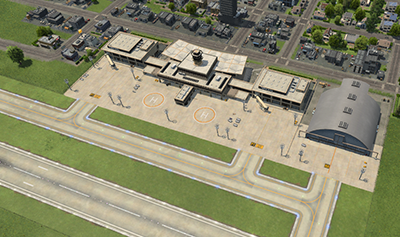
Choose the job first: a small passenger plane between two early airfields, a larger aircraft, or a helicopter connection. Then inspect both ends of the proposed route. A valid home facility cannot compensate for an incompatible destination.
For a plane, check both stops
- Inspect the intended aircraft’s compatibility and availability.
- Check the departure and arrival facilities against it.
- Provide the passenger or cargo terminal required by the service.
- Open the aircraft hangar to buy the vehicle, then assign its line.
- Watch its first take-off and arrival before purchasing the full fleet.
Keep route setup separate from demand. An aircraft that cannot use the destination has a compatibility problem; an aircraft completing flights without passengers needs an access and journey check.
For a helicopter, start at the heliport depot
If you cannot find the intended helicopter in a regular aircraft purchase screen, inspect the dedicated heliport. The manual distinguishes its depot from landing-only helipads. Check the available year and vehicle list in your own game rather than assuming an image from a later era guarantees availability now.
Create the service between suitable landing facilities, then assign one helicopter from its purchase depot. Observe the first journey and both terminal visits. Do not buy three more while the first vehicle still has no valid route.
If the aircraft arrives but carries nothing
Read what the terminal handles and what the vehicle carries. For passengers, inspect access to the destination buildings and the onward journey. For cargo, identify the exact source and receiving consumer or warehouse.
Keep one record for the first flight: vehicle, source, destination, terminal, load before departure and load after arrival. That is enough to separate “wrong facility” from “route runs but has no useful transport.” It is more informative than simply naming the aircraft as broken.
When comparing cost later, use actual service results. This guide does not claim that helicopters, planes or any particular airport layout are always the most profitable choice.
Source and screenshot scope
Urban Games’ official manual documents the controls and compatibility rules. The test sequence is independently organised. Images are unchanged publisher instructional excerpts used to explain their visible controls or layout; they are not our gameplay tests and no blanket open licence is claimed.