Dota 2 · Hero lesson · Phantom Strike
Phantom Assassin Phantom Strike: choose an entry with an exit
On this page
Phantom Strike can target friendly or enemy units and grants attack speed when used on an enemy. Stifling Dagger slows, while current critical mechanics use a Deadly Focus state rather than a guaranteed critical on every jump.
Follow the practice steps ↓Mechanics checked October 17, 2026 against Valve’s hero data · Editorial practice advice · Not match-tested
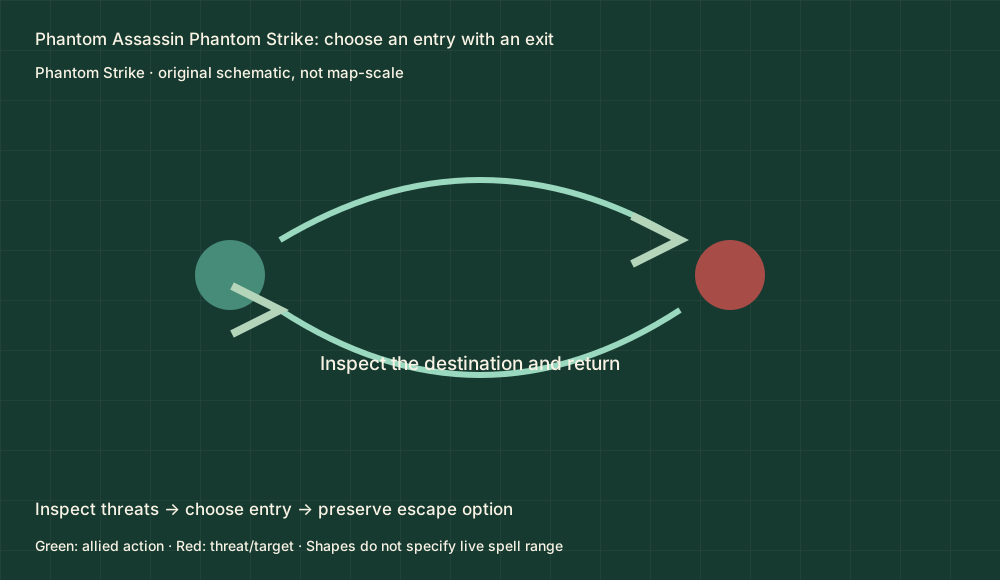
Practise the decision step by step
- Inspect the target and nearby opponents before committing to the jump.
- Look for a usable friendly-unit option or another route if the engagement turns bad.
- Use the dagger’s slow to help create the opportunity rather than assuming the jump itself keeps a target in place.
- Watch the current critical state instead of predicting a kill from one expected-damage number.
The mistake to look for
A target being in range does not make the surrounding fight favourable. Evasion is also not a promise of immunity to every form of damage.
A controlled demo exercise
Practise jumping to enemies and friendly units in demo mode. Add an extra threat beside the enemy and describe what changes in your entry decision before pressing the ability.
Keep the setup consistent between attempts: same hero state, same target arrangement and the same abilities available. Change one decision, observe the outcome, then repeat. If an item, upgrade or new patch changes the ability, read that effect before comparing the attempts.
Use this in a real match
Before acting, name the immediate objective: control a target, protect an ally, maintain position or create a damage opportunity. After the fight, review whether your chosen action produced that objective. The outcome of the match alone does not tell you which part of the sequence worked.
This page is a focused mechanics lesson. It does not supply a universal item build, talent order, exact timing script or ranked win-rate claim. Team composition, items and current balance changes can alter the best choice.
Sources and version limits
Valve’s official hero page · Official hero ability data, retrieved October 17, 2026. Ability behaviour described above comes from that dated source. The positioning, learning exercise and review questions are our editorial recommendations, not Valve’s guaranteed strategy. Check your client tooltip for exact values and upgrade conditions.