Stardew Valley · Beach Farm · Irrigation planning
Beach Farm sprinklers fail on sand—build the crop plan around that limit
On this page
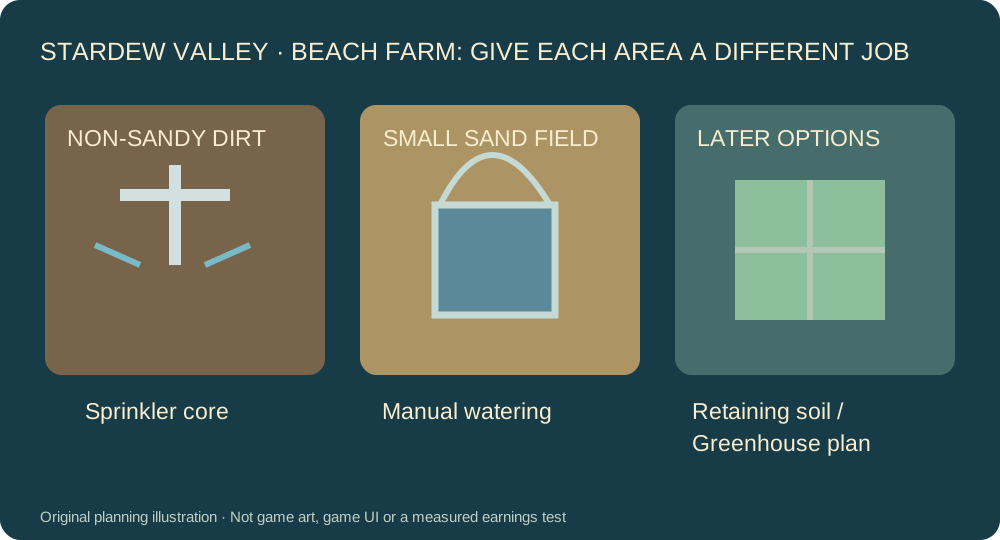
Sprinklers do not water the Beach Farm’s sandy soil. Use the non-sandy dirt for an irrigated crop core, keep a manageable manually watered field elsewhere, and treat Deluxe Retaining Soil as a later option rather than a starting resource.
See the game scene
Salmence — Beach Farm map overview from 1:39, January 21, 2026. Original creator footage for scene and interface context. The written mechanics below use the separately checked references. Open the original video if the player does not load.
Open the sprinkler-capable core first
The map has a contiguous 202-tile non-sandy patch, plus 28 other scattered non-sandy tiles. Fully opening the main patch requires clearing trees and large logs with a Steel Axe or better. Those numbers describe the terrain, not a guarantee that every tile will become a planted crop after sprinklers and paths occupy space.
- Identify the distinct non-sandy patch in your own farm rather than judging only whether a tile can be tilled.
- Clear enough of it to place one sprinkler and a small crop group.
- Plant a small group, water any dry soil initially and check it the following morning.
- Extend only across confirmed compatible tiles, leaving an access route.
If the local dirt test works while a sandy field remains dry, the sprinkler is functioning. Moving another copy onto the sand does not change the map rule.
Limit the daily manual field
On sand, choose a field you can water while still doing the rest of the day’s work. Reserve energy and time for mining, fishing or clearing the dirt patch instead of planting every available tile. An upgraded watering can can improve the manual routine, but it does not convert the sand into sprinkler-compatible land.
Use Deluxe Retaining Soil with its real prerequisite
The recipe comes from the Island Trader for 50 Cinder Shards. Crafting uses five Stone, three Fiber and one Clay. That access makes it a later planning option for many saves.
It retains water with 100% probability once the tile has been watered. Applying it to dry soil does not provide the initial water. It also continues supporting repeat harvests from the same planting. Verify the retained water after the first night before expanding a large field around it.
Give the remaining space a different job
Use open areas for buildings, processing and other activities instead of forcing the entire farm into a sprinkler-field design. A Greenhouse later offers a separate protected crop area; it does not remove the Beach Farm’s outdoor sand restriction.
At a season change or after soil is disturbed, inspect the field again rather than assuming last season’s planting state survived. If the plan feels too demanding, reduce the manually watered area before investing in more machines whose inputs you cannot maintain.
Sources and scope
Published October 18, 2026. Sources checked on this date: Farm Maps · Deluxe Retaining Soil · Sprinklers · Watering Cans · Greenhouse. Written for the documented 1.6 mechanics where version differences matter. Worked examples assume ordinary single-player prices and are calculated, not our gameplay earnings tests. Creator footage remains on the original upload.
Outdoor honey production · Fish Pond processing · All Stardew Valley guides