Transport Fever 3 · Passenger access
A stop can be nearby without being usable by passengers
On this page
Select the stop and check passenger access, not just the circle on the map. Passengers need a valid walking path without a major detour. Cargo only needs its source or destination inside the catchment radius.
Published October 19, 2026 · Sources checked October 19 · Vanilla station rules
Read the highlight before buying more buses
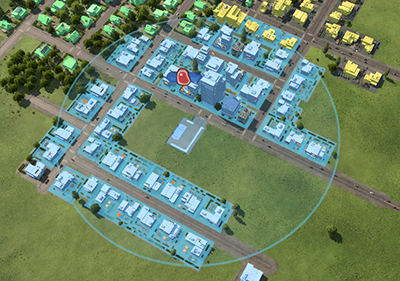
When placing or selecting a station, buildings are coloured by the access available: green for passengers, blue for cargo, white for both. Find the specific home, workplace or transfer location you intend to serve. A blue building in the screenshot is not evidence that its residents can board a bus there.
Follow the journey from the building
Look for the path between the intended origin and the stop. A short distance across the map may hide a long walk around an obstacle. Inspect the entrance and road connection rather than measuring a straight line through buildings or across a disconnected area.
Choose one origin for the first test. Note its highlight, the stop serving it and the destination on your line. If the origin lacks passenger access, fix that connection before altering the whole service. After a change, select the stop again and inspect the same building so you are comparing like with like.
Coverage is only the first check
A usable stop does not guarantee demand for every route. Follow the service through its listed stops and make sure it actually reaches the intended destination. If it cannot reach the assigned terminal, that is a route problem; if it completes the trip empty, return to the access and journey you are offering.
Keep the two observations separate:
- No passenger access at the intended origin: investigate the walk to the stop.
- Origin accessible, vehicle cannot complete the service: inspect the line and terminal warning.
- Passengers board but cannot make the intended transfer: inspect the receiving stop and the next leg, not only the first pickup.
Do not buy a larger fleet just to test whether an inaccessible origin becomes accessible. One service completing the intended journey is a better starting point than several buses repeating the same empty circuit.
Check after station edits
If the service worked before you moved or rebuilt a stop, inspect the affected origin and transfer again. Compare the new access with the old task the station served. A replacement in roughly the same place can still deserve a fresh coverage check.
Source checked October 19, 2026: developer catchment rules. The inspection order is an editorial recommendation, not a measured ridership test. For an unused platform, see alternative-terminal controls. All Transport Fever 3 guides →