Valheim 0.218+ · Advanced Smelting Metallurgy & Maritime Freight
Black Metal Metallurgy & Longboat Maritime Logistics Guide
On this page
- Black Metal Metallurgy vs Standard Smelters
- Operating the Blast Furnace: Thermal Airflow & Coal Ratios
- Ocean Logistics: The Abyssal Harpoon & Serpent Farming
- Maritime Freight Logistics: Longboat Packing & Harbor Engineering
- Canal Engineering & Coastal Navigational Lighthouses
- Windmill Grinding & Automated Agricultural Processing
- Automated Swamp Surtling Coal Farms
- Black Metal Chest Storage Compression & Foundry Sorting
- Valheim Metallurgy Troubleshooting & FAQ
- Sources & Related Tools
- Valheim tools
Mastering high-tier Valheim logistics requires operating the Blast Furnace powered by an Artisan Table to refine Black Metal Scrap, outfitting the 18-slot Longboat for bulk non-teleportable maritime freight, and harpooning ocean Sea Serpents for high-value food and armor. Black Metal Scrap cannot be processed in standard smelters; it requires a 2:1 coal-to-ore Blast Furnace cycle. Managing bulk ore transport demands engineered coastal deep-water harbors and Megingjord-assisted cart logistics along leveled dirt roadways.
Version boundary: Verified for Valheim 0.218.15+ (Ashlands Update). Thermal water damage values, Drakkar hull physics, Shield Generator fuel consumption, Wishbone acoustic detection algorithms, and boss resistance tables reflect current stable production code.
Black Metal Metallurgy vs Standard Smelters
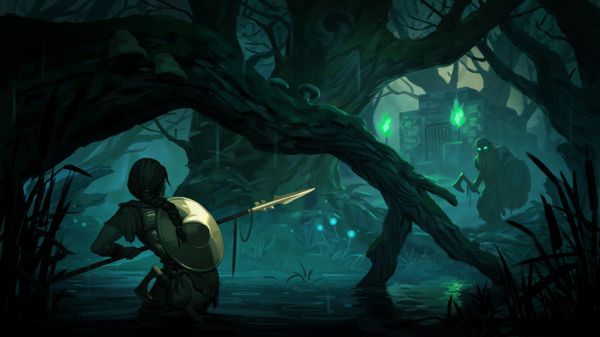
Black Metal Scrap is the primary resource dropped by Fulings across the Plains biome. However, returning Black Metal Scrap to your base reveals an immediate technological barrier: standard stone smelters cannot process Black Metal. Inserting Black Metal Scrap into an ordinary smelter displays the error: "Too hard to melt in this furnace."
To refine Black Metal into usable weapons and shields, you must advance past the Mountain biome by defeating Moder and securing her Dragon Tears. Dragon Tears unlock the Artisan Table, which in turn unlocks the industrial Blast Furnace.
| Smelting Infrastructure | Crafting Materials | Operating Capacity | Thermodynamic Throughput |
|---|---|---|---|
| Artisan Table | 2 Dragon Tears, 10 Wood | Crafting radius station | Pre-requisite tech node; unlocks Blast Furnace, Windmill, and Spinning Wheel |
| Blast Furnace | 20 Stone, 5 Surtling Cores, 10 Iron, 20 Fine Wood | 20 Coal, 10 Black Metal Scrap / Flametal | Burns 2 Coal per ore every 30 seconds (5 min for full 10-bar batch) |
| Longboat Vessel | 100 Iron Nails, 10 Deer Hide, 40 Fine Wood, 40 Ancient Bark | 18 Storage Slots (6,480 kg theoretical) | Max speed 25 km/h with full wind; 1,000 HP reinforced structural hull |
| Abyssal Harpoon | 8 Fine Wood, 30 Chitin, 3 Leather Scraps | Workbench Level 2 | Tethers oceanic fauna; essential for dragging Sea Serpents onto dry beaches |
| Megingjord Belt | 950 Gold Coins (Traders Haldor/Hildir) | +150 kg carry capacity (450 kg max) | Mandatory hauling accessory for loading and unloading ship cargo |
Operating the Blast Furnace: Thermal Airflow & Coal Ratios
The Blast Furnace operates at much higher thermodynamic output than previous smelting stations. It features two intake hoppers: a charcoal inlet on the left holding up to 20 Coal, and a mineral throat on the right holding up to 10 Black Metal Scrap (or unrefined Flametal Ore). The processing cycle requires exactly 2 Coal per metal ingot (burning 1 coal every 15 seconds), meaning a full hopper of 20 Coal processes exactly 10 Black Metal bars in 300 seconds (5 minutes).
When designing your industrial foundry sector, observe two structural rules:
- Chimney Flue Ventilation: The Blast Furnace ejects dense smoke plumes from its upper exhaust stack. Placing the furnace inside an enclosed room without an open 2x2 chimney will trigger ambient carbon monoxide smoke buildup, dealing 2 suffocation damage per second to nearby crafting players.
- Slag Catchment Slopes: Processed ingots are ejected from the front nozzle with moderate forward momentum. Build a downward-sloping 26-degree wood roof ramp beneath the outlet to automatically funnel ejected ingots directly into an organized sorting chest bin.
Ocean Logistics: The Abyssal Harpoon & Serpent Farming
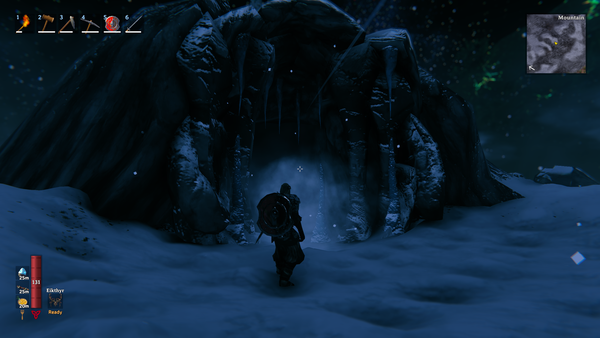
Maritime transport routes across the open ocean are frequently intercepted by Sea Serpents (400 HP). While serpents can be killed in deep water with bows, doing so forfeits their most valuable drop: Serpent Scales (which are heavy physics objects that immediately sink to the bottom of the ocean). Serpent meat floats, but scales sink beyond player diving depth.
To harvest both the scales and meat, employ the Abyssal Harpoon technique:
- Mine Chitin from Leviathans: Sail through ocean biomes to locate Abyssal Leviathans (floating living island shells covered in trees and barnacles). Mine the Abyssal Barnacles with a pickaxe to collect 30 Chitin, then craft the Abyssal Harpoon (8 Fine Wood, 30 Chitin, 3 Leather Scraps) at a Level 2 Workbench.
- Spear the Serpent: When a Sea Serpent attacks your Longboat at night or during an ocean storm, equip the Harpoon and throw it directly at the serpent’s head. This establishes an unbreakable tether that drains player stamina continuously (10 stamina per second while the boat moves).
- Tow to Shallow Shoals: Keep the boat moving at full sail toward the nearest coastal sandbar or beach. Do not dismount in deep water. Drag the thrashing serpent entirely out of the water onto dry sand. Once grounded, the serpent cannot submerge or flee; execute it with an Iron Atgeir or sword to collect both floating meat and ground-level scales for the Serpent Scale Shield.
Maritime Freight Logistics: Longboat Packing & Harbor Engineering
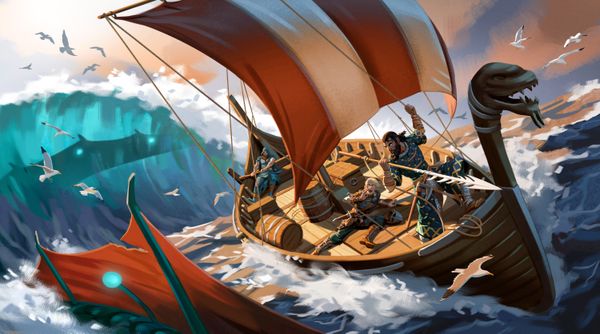
Because Black Metal, Iron, and Silver cannot pass through standard teleportation portals, mastering long-distance bulk maritime transport is mandatory for endgame progression. The Longboat is the undisputed workhorse of Norse freight logistics, offering 18 storage slots capable of holding up to 540 metal ingots in a single run.
Follow these operational principles to eliminate ship losses and accelerate turnaround times:
- Deep-Water Harbor Mooring: The Longboat draws roughly 2 meters of draft beneath the waterline. Never beach a loaded Longboat on rocky shallows. Construct stone or wood-iron piers extending into 4-meter deep water. Drive wooden core-wood pilings beside the hull to prevent storm surges from slamming the vessel against stone docks.
- Overland Cart Grade Highways: When hauling metal from inland plains settlements to coastal docks, avoid dragging carts across uneven terrain. Carts experience steep physical friction multipliers based on terrain grade and grass density. Use the Hoe with Level Ground and Pathen to construct a flat 2-meter-wide dirt highway. A single player equipped with Megingjord can haul a 3,000 kg cart on flat dirt with minimal stamina drain.
- Wind Navigation Strategy: Valheim wind patterns obey a dynamic weather vector. If the wind blows directly into your bow (the wind arrow on the minimap turns dark grey), do not tack endlessly back and forth across narrow fjords. Drop sails to Rudder Power 1 (S to back down, or W once from neutral). Rudder power propels the Longboat forward via steady rowing paddle propulsion at an unyielding 9 km/h regardless of headwind direction.
Canal Engineering & Coastal Navigational Lighthouses
When circumnavigating large continents with heavy ore cargoes, sailing around massive peninsulas adds 30 to 45 minutes of real-world transit time. Advanced seafarers overcome continental bottlenecks by excavating Navigational Canals through narrow land isthmuses.
Follow these canal engineering specifications:
- Dredging Depth Profile: Equip an Iron Pickaxe and excavate a continuous channel spanning the shortest overland gap between two oceans. The canal floor must be dredged to at least 3 meters beneath sea level so the Longboat's keel does not snag on bedrock during low-tide wave troughs.
- Vertical Retaining Walls: Shave canal banks with the Hoe or reinforce them with Stone Wall 2x1 blocks. Loose dirt banks erode under repeated hull collisions, slowly silting the channel over time.
- Bonfire Lighthouses: Erect 10-meter stone towers on canal headlands crowned with Bonfires (15 Wood, 5 Core Wood, 2 Surtling Cores) or glowing Blue/Green Iron Sconces. In high fog conditions where the minimap HUD is toggled off, bonfires project a visible luminous beam across 200 meters of water, guiding ships safely into harbor mouths.
Windmill Grinding & Automated Agricultural Processing
Parallel to the Blast Furnace, the Artisan Table unlocks the Windmill (20 Stone, 30 Wood, 30 Iron Nails). The Windmill is the exclusive machine used to grind harvested raw Barley into Barley Flour, the cornerstone ingredient for top-tier health foods like Bread, Lox Meat Pies, and Fish Wraps.
Windmill operation depends directly on atmospheric weather variables:
- Wind Velocity Dependency: Unlike the steady clockwork of the Blast Furnace, the Windmill's grinding throughput scales dynamically with global wind speed. In dead calm conditions, the sails stop rotating entirely (0 throughput). During severe ocean storms, the windmill processes a full 50-stack of Barley in less than 90 seconds.
- Elevation & Clear Airflow: Always construct windmills on elevated coastal ridges or open plains plateaus. Surrounding trees, high stone towers, and mountain bluffs obstruct ambient airflow, significantly reducing rotational RPM.
- The Stone Oven Companion: Pair your windmill row with a dedicated Stone Oven (15 Stone, 15 Iron, 20 Fine Wood). While cauldrons brew raw doughs, the Stone Oven bakes raw bread and uncooked meat pies into completed consumables fueled by 10 Wood per baking session.
Automated Swamp Surtling Coal Farms
Operating a battery of multiple Blast Furnaces demands thousands of Coal units. Burning valuable raw wood in conventional charcoal kilns is labor-intensive and consumes immense forest acreage. The premier industrial solution is constructing an Automated Surtling Coal Farm in the Swamp biome.
Build the farm following this 3-step terraforming technique:
- Locate Surtling Geysers: Explore a large Swamp until you identify a cluster of 2 to 4 active flame geysers. Geysers spawn 3 Surtlings every 5 minutes in a continuous loop.
- Dredge the Water Table: Equip your Iron Pickaxe and dig the ground directly surrounding the fire geyser down until shallow swamp water fills the depression. Surtlings take lethal water damage upon spawning.
- Passive Loot Harvesting: Every time Surtlings materialize from the geyser, they immediately contact the water layer and perish within 2 seconds. They drop 4 to 5 Coal and 1 to 2 Surtling Cores per mob. Construct an elevated wooden walkway connecting the geysers to collect 300+ Coal and 50 Surtling Cores per hour passively without swinging a weapon.
Black Metal Chest Storage Compression & Foundry Sorting
As industrial smelting scales to hundreds of metal ingots, organizing workshop footprints becomes critical to avoid container clutter. Defeating Fulings and processing Black Metal unlocks the Black Metal Chest (crafted with 10 Wood, 2 Tar, and 6 Black Metal at a Workbench).
The Black Metal Chest represents the pinnacle of storage density in Valheim:
- 32-Slot Container Capacity: Provides 32 individual item slots within a compact 1x1 floor grid footprint (8 columns by 4 rows). In comparison, standard wooden chests hold only 10 slots and Reinforced Iron chests hold 24 slots.
- Stack Density Optimization: By stacking Black Metal Chests horizontally on wood-iron beams with 0.5-meter vertical spacing, a single 2x2 meter foundry wall can hold 8 Black Metal Chests, providing 256 inventory slots capable of holding over 7,600 refined ingots directly beside your Blast Furnace ejection chute.
- Quick-Stack Routine: Take advantage of the native Quick Stack hotkey (Shift + E) while facing your storage battery to instantly deposit all matching metal ingots and coal from personal inventory into designated containers in a single action.
Valheim Metallurgy Troubleshooting & FAQ
- Why does my Blast Furnace refuse to accept regular Iron Scrap or Copper Ore?
- The Blast Furnace is a specialized high-temperature metallurgical station designed exclusively for end-game ores: Black Metal Scrap and Flametal Ore. It does not accept early-game minerals like Copper, Tin, or Iron Scrap. Continue processing early-game ores in standard stone Smelters.
- Can I load a Cart directly onto the deck of my Longboat to double its storage capacity?
- Yes, but with significant mechanical risk. You can break the wooden cart wheels above the center deck of the Longboat so the cart chassis drops into the open hull. However, during high oceanic storms or serpent encounters, the cart physics body will collide repeatedly with the mast and hull ribs, inflicting 10-20 structural impact damage per second until the boat breaks in half. Dedicated 18-slot internal ship storage is far safer for ocean voyages.
- Why did my beached Longboat suddenly break apart overnight while anchored near my base?
- Undocked boats moored in shallow surf are subjected to constant wave displacement. When ocean waves rise and fall during rainstorms, the boat repeatedly slams against the rocky seabed, chipping away its 1,000 HP. Always anchor in deep water, or disassemble the boat with an axe when returning to base and store the materials safely in a shoreline chest.
- How do I maximize coal production to keep multiple Blast Furnaces running continuously?
- The most efficient continuous coal source in Valheim is farming Surtling Spawners in the Swamp. Locate a swamp with 2 to 3 flame geysers. Use your Hoe to dig the ground around each geyser down below the water line. When Surtlings spawn, they instantly touch water and perish, dropping Coal and Surtling Cores automatically without requiring wood burning.
- Does Black Metal have any building applications beyond weapons and shields?
- Yes. In the Mistlands and Ashlands tiers, Black Metal is an essential building component for the Eitr Refinery, Black Metal Chests (which provide 32 compact storage slots per container), ballista automated turrets, and high-tier structural reinforcement brackets.
Sources & Related Tools
Blast Furnace thermodynamic cycle rates, Longboat hydrodynamic speeds, and Sea Serpent spawn parameters verified on Valheim 0.218.15+ (Ashlands Update). Add up your non-teleportable Iron, Silver, and Black Metal shipping quotas in our Valheim Armor & Weapon Upgrade Planner, explore all calculators in the Craft & Quest Tool Suite, or consult our complete game directory in the Valheim Game Hub.