Rust PC · Industrial automation
Rust Pipe Tool Cannot Connect Through a Wall: Route Ports and Corners Correctly
On this page
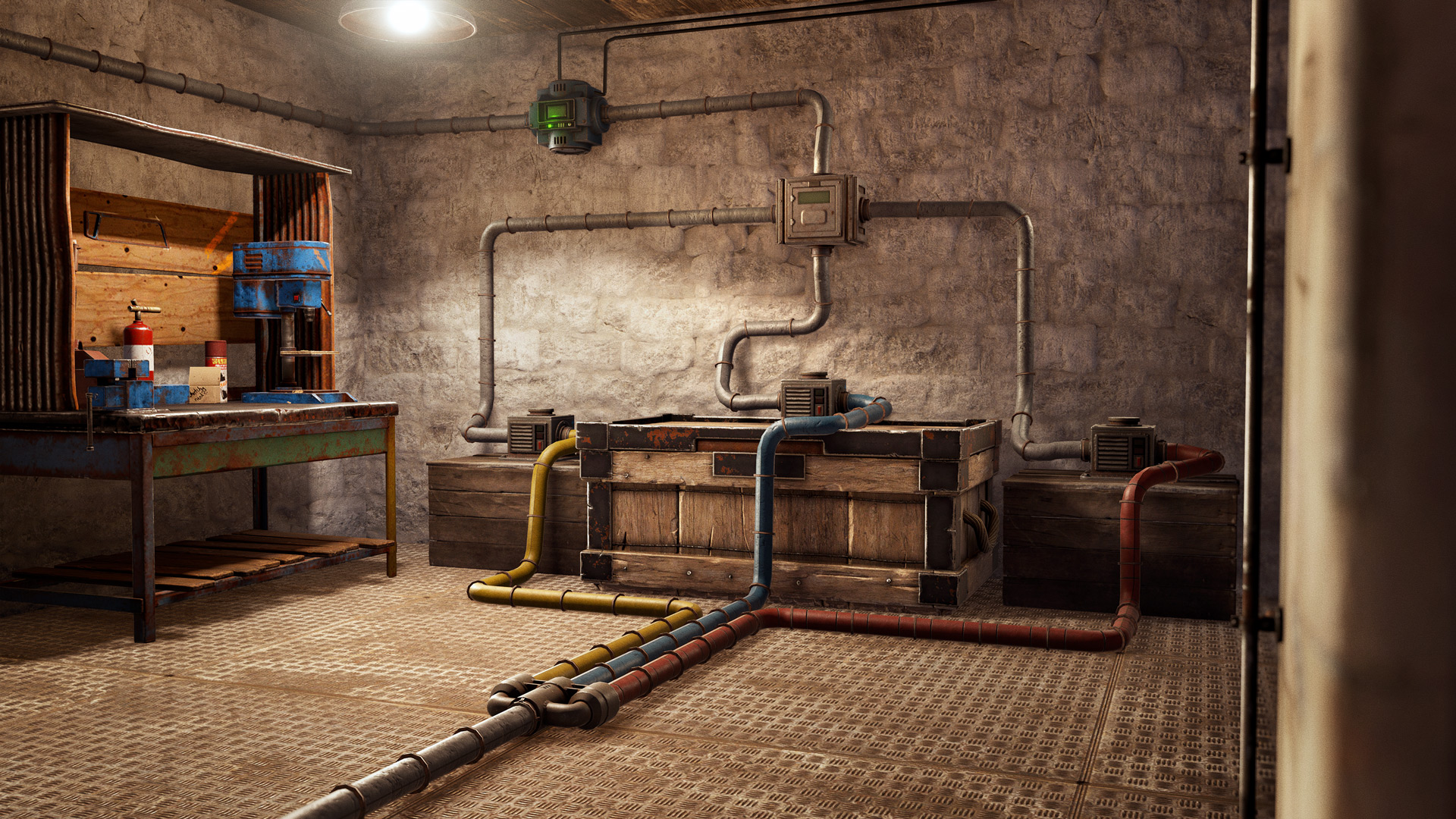
The original Pipe Tool rules prevent pipes passing through building blocks and vending machines, while allowing paths through some deployables. A pipe placement failure can therefore be a route problem rather than missing power. Check the actual industrial ports and the physical path first.
Published October 18, 2026 · Developer revisions and current item references reviewed
Build the smallest useful test first
- Identify the source output and destination input. Do not use a power connector as though it were an industrial port.
- Inspect the straight path for building geometry and vending machines. Plan a permitted route around the obstacle.
- Place shorter corner sections where needed, then trace the completed line end to end.
- Use connection highlighting to identify the intended route in a crowded setup before changing another pipe.
A controlled example
A box and conveyor can be physically near each other while the direct segment crosses a structural wall. Adding a new battery does not alter that geometric obstacle. Move the path through a permitted opening or around the obstruction, then return to the power and filter checks only if transfer still fails.
Make the system serve the actual goal
The March placement revision allows tighter pipe-point spacing and offers Shift placement that collides with deployables. That is useful for tidy visible routing, but it is not permission to ignore structural restrictions. Choose pipe colors as a maintenance aid: one for incoming materials, another for finished output, and a separate convention for returns if the design intentionally has them.
Match the symptom to the next check
| What you see | What to check |
|---|---|
| The tool will not finish a segment | Inspect collision and endpoint compatibility. |
| A visible line does not move items | Physical connection is only one requirement; inspect the conveyor state next. |
| I cannot tell which pipe belongs to the machine | Highlight the individual connection before removing adjacent lines. |
Version and setup limits
Pictures show the historical industrial hardware. Server rules and later placement changes can affect the exact route; this guide does not claim every visible gap accepts a pipe.
Keep a note of the server and the one setting changed between observations. A modified server can differ from the default design; a historical demonstration is not a measurement of the installation in front of you. Restore the full line in stages after the isolated test works, checking the destination stock after each stage rather than assuming every new connection preserves the result.
Sources
Retrieved October 18, 2026. The troubleshooting order and arithmetic examples are independently written editorial guidance, not a personal gameplay test or a guaranteed server result.