Stardew Valley · 1.6 mechanics · Fishing income
Is the Fish Smoker worth it? Subtract coal before counting the profit
On this page
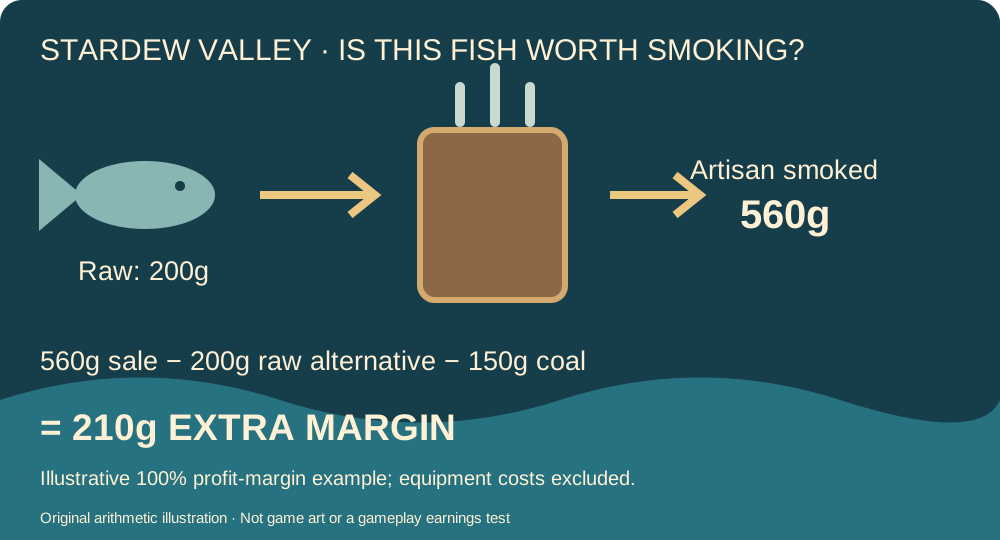
Smoking doubles the fish’s raw selling value; Artisan raises that to 2.8 times. The extra profit is the smoked price minus the raw sale you gave up and one coal. Higher-value catches make better use of scarce coal. An expensive coal purchase can erase the benefit on a cheap fish.
Published October 18, 2026 · Single-player, ordinary 100% profit-margin example · 1.6 feature reference
Watch the machine demonstration
Watch KitaDollx’s Fish Smoker basics from 0:47
▶ Open the creator’s demonstration at 0:47
Start with the fish’s actual raw sale value
Call the value of selling this particular fish raw R. It already reflects its quality and your current fishing profession. Do not apply Fisher or Angler again after using that value. The smoked product benefits from those fishing professions too, while Artisan supplies the additional processing bonus.
For the single-player example here:
- Without Artisan: smoked sale ≈ 2 × R.
- With Artisan: smoked sale ≈ 2.8 × R.
- Additional margin versus selling raw = smoked sale − R − coal cost.
Use whole-gold results in the game when close to break-even; rounding can matter. These examples avoid fractional prices and assume the ordinary profit margin, not a reduced-profit multiplayer setup.
What bought coal does to the decision
The Blacksmith charges 150g per coal in Year 1 and 250g from Year 2 onward. Each fish uses one coal. The table compares the same fish sold raw with processing it; it does not count the entire smoked sale as new profit.
On a narrow screen, swipe the price table sideways to compare all columns.
| Raw value R | Smoked without Artisan | Smoked with Artisan | Extra margin, Artisan + 150g coal | Extra margin, Artisan + 250g coal |
|---|---|---|---|---|
| 100g | 200g | 280g | 30g | −70g |
| 200g | 400g | 560g | 210g | 110g |
| 400g | 800g | 1,120g | 570g | 470g |
Without Artisan, smoking beats the raw sale only when R exceeds the coal cost, before equipment costs. A 100g fish smoked using Year-1 bought coal produces 200 − 100 − 150 = −50g of extra margin. Receiving more gold at the shipping bin does not mean that processing improved the result.
Mined coal has no shop payment attached, but it still has another use. If you need it for bars or a tool upgrade, reserve that supply before processing low-value catches.
Get the machine without confusing the recipe and the equipment
The Fish Shop sells the crafting recipe for 10,000g. Crafting one requires 10 Hardwood and one each of Sea Jelly, River Jelly and Cave Jelly. Riverland Farm starts with a Fish Smoker, so check your starting equipment before buying a recipe solely to use your first one. The recipe is useful when you want to craft additional machines.
A new machine should solve an actual queue of worthwhile fish. The recipe expense is not recovered simply because the first batch sells. Keep it separate from the per-fish margin, and include the material collection effort when deciding whether this is the next upgrade your farm needs.
A repeatable catch-to-sale loop
- Reserve fish with another purpose. Do not automatically process a catch you intend to keep, deliver or use elsewhere.
- Sort the remaining fish by raw sale value. If coal is limited, process the higher-value fish first.
- Bring one coal per fish. Keep the selected fish and coal available, load the machine and allow its 50 in-game minutes of processing.
- Collect before loading the next fish. A finished product is not an empty machine ready for another batch.
- Use an appropriate sale route. Smoked Fish is an artisan good: Pierre can buy it, but Willy does not buy it. The shipping bin is another sale route.
Smoking preserves the fish’s quality. It is not an upgrade from a low-star fish to an iridium fish. Fisher and Angler belong to the fishing skill path; Artisan is on the Farming Tiller branch at level 10. A new fishing save should calculate its present return rather than assuming it already has the completed profession setup.
If the plan seems to lose money
Check the coal source, current professions, raw fish quality and whether you deducted the raw-sale alternative. Then separate operating margin from the one-time recipe expense. If the margin is small, sell that catch raw and save coal for a better batch instead of scaling up a weak process.
Sources and version
References checked October 18, 2026: Fish Smoker requirements, Smoked Fish prices and profession effects, coal costs, fishing professions and Farming profession path. This guide covers the documented 1.6 mechanic, not a claim that future 1.7 features are released. The model is calculated, not our gameplay earnings test. Creator footage stays on the original YouTube upload; it is not rehosted as our own footage.
Plan the catch with rod attachment checks, targeted bait costs and two-tackle choices. Stardew Valley guides → · Official game website